Underwater Dreamcatcher Tumbler Graphics & Crafts
When I first opened the Underwater Dreamcatcher Tumbler file, I immediately recognized its potential for small business branding projects that need a dreamy, coastal, or bohemian touch. The design carries a soft, handcrafted mood with layered oceanic motifs and woven dreamcatcher elements that feel both organic and intentional. As a brand designer who works regularly with local businesses, I evaluate every graphic design asset for its real-world utility in packaging, labels, and promotional visuals. This one stands out for its ability to blend decorative storytelling with functional brand identity work.
A First Look at the Mood and Brand Personality
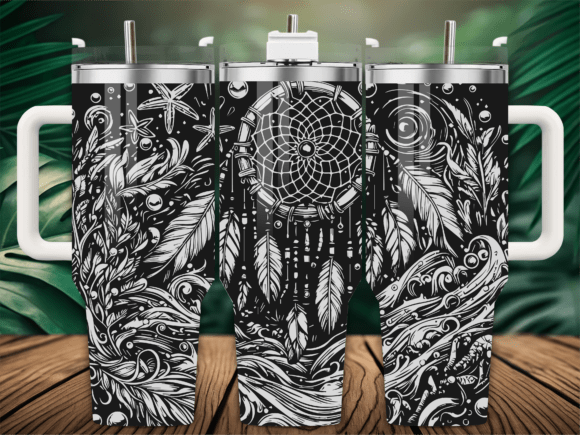
The Underwater Dreamcatcher Tumbler evokes a serene, waterfront atmosphere with subtle mystical undertones. The dreamcatcher structure anchors the composition while underwater elements like drifting nets, soft wave forms, and delicate aquatic accents create a sense of movement and calm. This design feels feminine without being overly sweet, handmade without appearing rough, and decorative without losing readability. It suggests a brand personality that values nature, intentionality, and gentle artistry. For a local business, this translates into a visual identity that feels personal, trustworthy, and emotionally resonant. I see it fitting beautifully with a coastal bakery, a handmade soap company, a boutique florist, a children's product line, or a home decor shop that specializes in beach-inspired goods. The asset does not scream loud or modern; instead, it whispers quality and care.
Real Branding Application for a Local Bakery Project
Let me walk through a real project to illustrate how this graphic design asset performs in the field. I recently worked with a small coastal bakery called Salt & Honey that needed packaging for their signature sea salt caramel cookies, ocean-themed cake pops, and seasonal gift boxes. The Underwater Dreamcatcher Tumbler became the hero visual for their product labels, bakery tags, and promotional inserts. The dreamcatcher motif gave the packaging a sense of protection and handmade charm, while the underwater elements reinforced their coastal location and ocean-inspired recipes. For the cookie labels, I used a cropped section of the design as a background accent behind the product name, keeping the text readable while preserving the artisanal feel. The full wrap design, originally intended for a tumbler, adapted beautifully to a cylindrical cookie tin label. That flexibility is rare in design assets, and it saved significant time in the packaging design phase.
Where the Design Asset Shines Brightest
In my testing across multiple brand touchpoints, the Underwater Dreamcatcher Tumbler performs best in specific applications. It works exceptionally well as a hero graphic on product labels, especially for jars, tins, tubes, and boxes where the wrapping can flow continuously. It also makes a strong decorative brand element on thank-you cards, hang tags, and sticker sheets. For social media graphics, the design adds a consistent visual thread that ties together product launches, seasonal promotions, and behind-the-scenes content. Small business owners can use it as a background element in Instagram story templates, promotional banners, or website hero sections without overwhelming the copy. I also found it effective as a printable insert inside gift boxes or as a wrap-around band for boutique packaging. The full wrap format, originally designed for the H2.0 Tumbler Laser SVG, translates naturally to any cylindrical product format, which is a huge advantage for brands selling candles, drinkware, skincare bottles, or food containers.
Careful Placement and Brand Fit Considerations
Not every brand should use this asset at full scale. The Underwater Dreamcatcher Tumbler is decorative and detailed, which means it can compete with important text if placed too aggressively. I advise caution when using it on very small labels, ingredient-heavy layouts, or legal information areas where clarity is paramount. For formal corporate branding or luxury minimalist brands that rely on stark white space and restrained typography, this design may feel too ornate. It also requires careful handling on low-contrast backgrounds, especially if the brand uses a pale or pastel palette. When testing the design on a mockup for a children's product brand, I noticed that the dreamcatcher details needed to be simplified or scaled down to avoid visual clutter on a small snack pouch label. The solution was to use only a portion of the design as a subtle watermark pattern rather than the full wrap. That kind of flexibility makes this asset valuable for experienced designers who know how to edit and adapt, but beginners should test it on multiple mockups before committing to a final layout.
Practical Designer Notes for Real-World Use
Before you integrate this graphic design asset into your small business branding or packaging design workflow, here are a few practical checks I run with every client project. First, test the design on a real product mockup at actual scale. The Underwater Dreamcatcher Tumbler looks stunning on a full-size tumbler wrap, but on a 2-inch label, some of the finer netting details may become muddled. I recommend previewing it at 50% and 25% of original size to ensure the integrity of the illustration holds up. Second, check the design in black and white. If your brand uses monochrome packaging or one-color printing, you need to confirm that the contrast and line weight remain readable. Third, test it with your brand fonts. I paired this design with a serif font for the bakery project and with a script font for a boutique candle line. Both worked, but the script font required more spacing to avoid tangling with the dreamcatcher threads. A sans serif or handwritten font would also be safe choices for most applications. Fourth, inspect the SVG and PNG files for editability. The SVG format allowed me to recolor the underwater elements to match the brand palette, which was essential for maintaining visual hierarchy across the product line. Finally, confirm the commercial license before using the asset for client work, business branding, or physical product sales. Many design assets on creative marketplaces have restrictions on resale or mass production, so always read the licensing terms carefully.
Strengthening Brand Presentation and Customer Trust
When a local business uses a cohesive, professional graphic design asset like this one, the impact on customer perception is immediate. The Underwater Dreamcatcher Tumbler helps establish a stronger first impression because it communicates that the brand has invested in its visual identity. Better product recognition follows when the same design appears on labels, social media graphics, and promotional materials. That consistency builds visual hierarchy across the brand experience, so customers know exactly what to expect from the product inside. For a handmade business, especially one selling in farmers markets or boutique shops, this level of polish can be the difference between a casual browse and a confident purchase. I have seen small brands increase their repeat customer rate simply by upgrading their packaging from generic labels to a well-designed, themed wrap that tells a story. The emotional connection created by the dreamcatcher motif—protection, dreams, the ocean—adds a layer of meaning that customers remember and share on social media.
Best Formats and Use Cases for Marketing Visuals
In my workflow, I use the Underwater Dreamcatcher Tumbler across several channels. For product labels, I rely on the full wrap design for cylindrical containers and the cropped SVG for flat pouches or boxes. For promotional banners, I use the PNG version with a transparent background so I can layer it behind product photography without hard edges. The design also works well as a decorative frame for business cards, especially for brands that want a beachy or bohemian identity. For seasonal campaign visuals, such as summer solstice promotions or ocean conservation fundraisers, this asset is a natural fit. I have also used it as a background element in printable inserts, like recipe cards or care instructions, that go inside product packaging. The key is to treat the design as a flexible brand element rather than a one-time label. When you think of it as a core part of your brand identity, its value multiplies across every customer touchpoint.
Final Thoughts on Integrating This Asset Into Your Brand
The Underwater Dreamcatcher Tumbler is more than a decorative graphic; it is a strategic tool for small business owners, boutique owners, handmade sellers, food businesses, and creative entrepreneurs who want to elevate their brand presentation without hiring a full design studio. It offers a ready-made visual language that feels premium, handmade, and emotionally grounded. As with any design asset, the final result depends on how well you adapt it to your specific product, audience, and brand voice. Test it on real packaging mockups, compare it with competitor packaging, review its performance in black and white, and experiment with different font pairings. When used thoughtfully, this asset can support stronger customer trust, more professional packaging, better shelf appeal, and a more polished overall brand identity. For the local business owner who wants to stand out in a crowded market, this kind of intentional design work is not optional—it is essential.