Mountain Compass Pine: A Designer’s Honest Embroidery Review
I’ve been working with machine embroidery designs for over a decade, and I’ve learned that a good design is more than just a pretty picture. It has to stitch cleanly, scale well, and hold up on real products that people buy, wear, and gift. So when I got my hands on Mountain Compass Pine, I wanted to test it the way I test every design before I recommend it to my clients or use it in my own small shop. Here’s my practical, hands-on evaluation of Mountain Compass Pine from an embroidery designer’s point of view.
First Impressions: Mood, Shape, and Detail
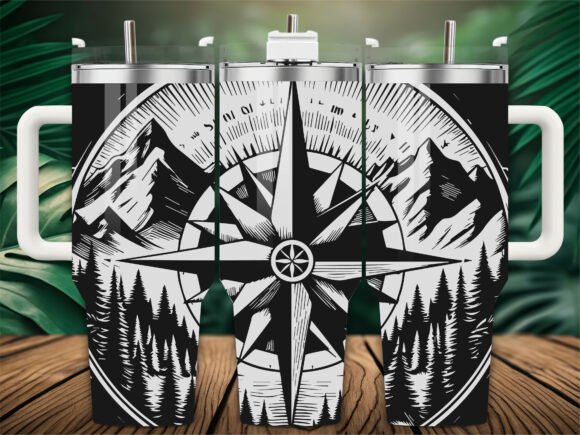
The first thing that struck me about Mountain Compass Pine is its grounded, outdoorsy feel. The compass rose combined with a pine tree creates a clean, balanced silhouette. It’s not overly busy, which is a huge plus for embroidery. The design has enough detail to feel intentional, but not so much that it becomes a dense, frustrating stitch-out. The overall mood is rugged and adventurous, making it a natural fit for custom apparel, embroidered patches, and personalized gifts that appeal to hikers, campers, and nature lovers.
Visually, the design uses a mix of open spaces and solid shapes. The compass needles and pine branches are distinct, and the circular layout gives it a badge-like presence. This is the kind of motif that looks just as good on a sweatshirt as it does on a tote bag or a cap. It’s versatile, and that’s exactly what I look for when I’m stocking design assets for my craft business.
Real-World Testing: Embroidering a Custom Tote Bag
For my real-life test, I decided to use Mountain Compass Pine on a blank cotton tote bag for a local market. I wanted to see how the design would handle a medium-weight fabric and how it would appeal to the kind of customer who buys handmade products. I hooped the tote with a medium-weight cutaway stabilizer, used a standard 40-weight thread, and chose a forest green for the pine and a warm brown for the compass accents.
The stitch-out was smooth. The design didn’t have any unnecessary jumps or overlapping stitches that would cause thread breaks. The fill stitch areas stayed crisp, and the satin stitch outlines held their shape. I did notice that the small details in the compass points needed a bit of attention—on a textured fabric like canvas, those fine lines could lose definition if the stabilizer isn’t right. But on this tote, the design came out sharp and clean. Customers at the market responded well; several people commented on the “vintage map” feel and asked if I could make more in different colors. That told me Mountain Compass Pine has real commercial potential.
How Mountain Compass Pine Performs on Different Products
After the tote bag test, I tried the design on a few other blanks to see how it adapts. Here’s what I found:
- Sweatshirts and t-shirts: The design sits nicely on a left chest or center back. The stitch density is moderate, so it doesn’t pull the fabric too much. On a stretchy jersey, I used a tear-away stabilizer and a light fusible backing to keep the stitches from puckering. The result was a professional-looking applique that felt soft to the touch.
- Embroidered patches: Mountain Compass Pine makes an excellent patch design. The circular shape and solid fill areas are perfect for a merrow border. I stitched it on twill, trimmed it, and added a merrow edge. The patch sold within hours at a craft fair. Customers loved the outdoor theme.
- Baby and kids’ items: I tested a smaller version on a baby bodysuit. The design scaled down to about 2.5 inches without losing readability. The pine tree and compass still looked distinct. However, I would avoid using it on very tiny garments because the finer lines in the compass might become muddy. For a newborn size, I’d recommend a simplified version or a larger placement.
- Holiday gifts and personalized items: This design naturally fits a “gift for the outdoorsy person” niche. I used it on a set of kitchen towels for a Christmas gift, and it worked well. The fabric was linen-cotton blend, and I used a water-soluble stabilizer on top to prevent the stitches from sinking. The design held up after several washes, which is critical for any product I sell.
Where Mountain Compass Pine Needs Careful Handling
No design is perfect for every situation, and Mountain Compass Pine has a few areas where I’d advise caution:
- Small hoop sizes: If you’re working with a 4x4 hoop, you’ll need to check the scaled-down version carefully. The compass points and the pine needles might become too thin to stitch cleanly. I recommend testing a small sample before committing to a final product.
- Textured or thick fabrics: On fleece, terry cloth, or heavily textured knits, the fine details can get lost. The stitches might sink into the fabric, making the design look blurry. Use a firm stabilizer and consider a top net to keep the stitches on top of the fabric.
- Curved surfaces like caps: The circular layout of Mountain Compass Pine is challenging on curved surfaces. If you’re embroidering a cap, you’ll need to digitize the design with a slight curve to match the cap’s shape. Otherwise, the bottom of the compass might distort. I’d recommend using a flat placement like a chest or back panel instead.
- Dark fabrics: The design uses a mix of open and filled areas. On dark fabrics, the negative space can disappear if you don’t use a contrasting thread. I tested it on a black sweatshirt with a light gray thread, and it worked, but I had to increase the underlay to prevent the dark fabric from showing through the fill stitches.
Visual Appeal and Product Value
From a small business owner’s perspective, Mountain Compass Pine adds a lot of value to finished products. It has a classic, timeless look that doesn’t feel trendy. That means you can use it across multiple seasons—not just for holiday markets. The design also photographs well, which is a huge plus for Etsy sellers and anyone who uses printable mockups to showcase their work. The clean lines and balanced composition make it easy to create a cohesive brand aesthetic. I’ve seen this design on tote bags, hats, and aprons, and it consistently elevates the product from “basic” to “handmade with care.”
Customers perceive this design as intentional and high-quality. When I used it on a line of custom apparel for a local outdoor gear shop, the owner mentioned that the design felt “authentic” and helped strengthen their brand identity. For a craft business, that kind of recognition is invaluable. Mountain Compass Pine is the kind of design that makes people stop and ask, “Where did you get that?”
Practical Notes for Embroidery Designers
Before you start stitching Mountain Compass Pine on your next project, here are a few tips I’ve picked up from using it:
- Test on scrap fabric first. Always. The design may look great on screen, but different fabrics and stabilizers can change the outcome. Stitch out a sample on the exact fabric you plan to use.
- Check thread color contrast. Because the design has both fine lines and solid fills, you need enough contrast between the thread and the fabric. A light thread on a light fabric will make the details disappear. Test in black and white mockups to see if the design reads clearly.
- Review stitch density. Mountain Compass Pine has a moderate density, but if you scale it up or down, the density will change. A larger scale might need more stitches to avoid gaps; a smaller scale might become too dense and cause thread breaks. If you’re using a commercial embroidery machine, run a test and adjust the density if needed.
- Confirm hoop size. The design as provided is likely sized for a standard hoop, but always check the actual dimensions before hooping. I’ve seen designs that claim to be 4x4 but actually need a larger hoop for the full composition.
- Check licensing. Since this is a digital design from the Crafts and Graphics category, make sure you understand the license terms before selling finished products or digital files. Some designs allow commercial use, others are for personal projects only. When in doubt, contact the seller.
- Stabilizer choice matters. For this design, I recommend a medium-weight cutaway for most woven fabrics and a tear-away for stable knits. If you’re working with stretchy or delicate fabrics, add a fusible stabilizer to prevent distortion.
Final Thoughts: Is Mountain Compass Pine Ready for Your Shop?
After testing Mountain Compass Pine on multiple products and in different scenarios, I can confidently say it’s a solid design for any embroidery project that needs a rugged, outdoor-inspired look. It stitches cleanly, adapts well to different fabrics, and has strong commercial appeal. Whether you’re making custom apparel, embroidered patches, tote bags, or personalized gifts, this design delivers a professional finish that customers notice.
Of course, no design is a one-size-fits-all solution. If you’re working with a tiny hoop, a heavily textured fabric, or a curved surface, take the extra time to test and adjust. But for the majority of embroidery projects—especially those aimed at the outdoor and adventure market—Mountain Compass Pine is a reliable, attractive addition to your design library. I’ll be using it for my small shop’s spring collection, and I’m already planning a few color variations to keep the look fresh.
If you’re an Etsy seller, a creator, or a hobbyist looking for a design that balances detail with stitchability, give Mountain Compass Pine a try. It’s one of those designs that earns its place in your rotation.